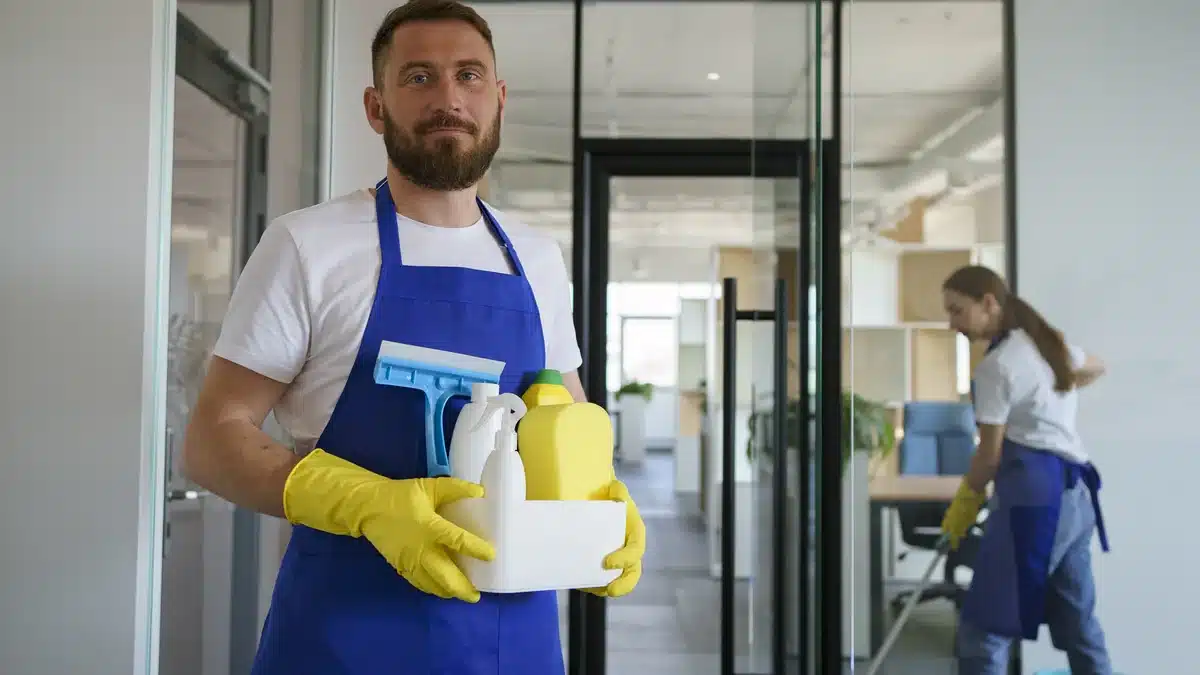
A day porter checklist should tell the worker what to check at opening, which areas to revisit during the day and what to hand over at the end of the shift. Give each task a location, frequency and reporting rule. Busy restrooms and lightly used meeting rooms rarely need the same schedule.
Start with the template below, then remove tasks your property does not need. Add the room names, check times and management contact before sharing it with the provider. That makes the checklist useful on a real shift, rather than another form to tick without explanation.
Start with the route and service boundaries
List the floors, restrooms, entrances and shared rooms in scope. Mark restricted areas, the storage point and the person authorized to redirect work. When planning day porter services, include time for travel between areas and for documenting issues, not just the visible cleaning tasks.
The checklist should describe the assignment without promising that every area will remain untouched by normal use between rounds. A documented inspection provides a useful record; it is not a guarantee that a new spill cannot occur afterward.
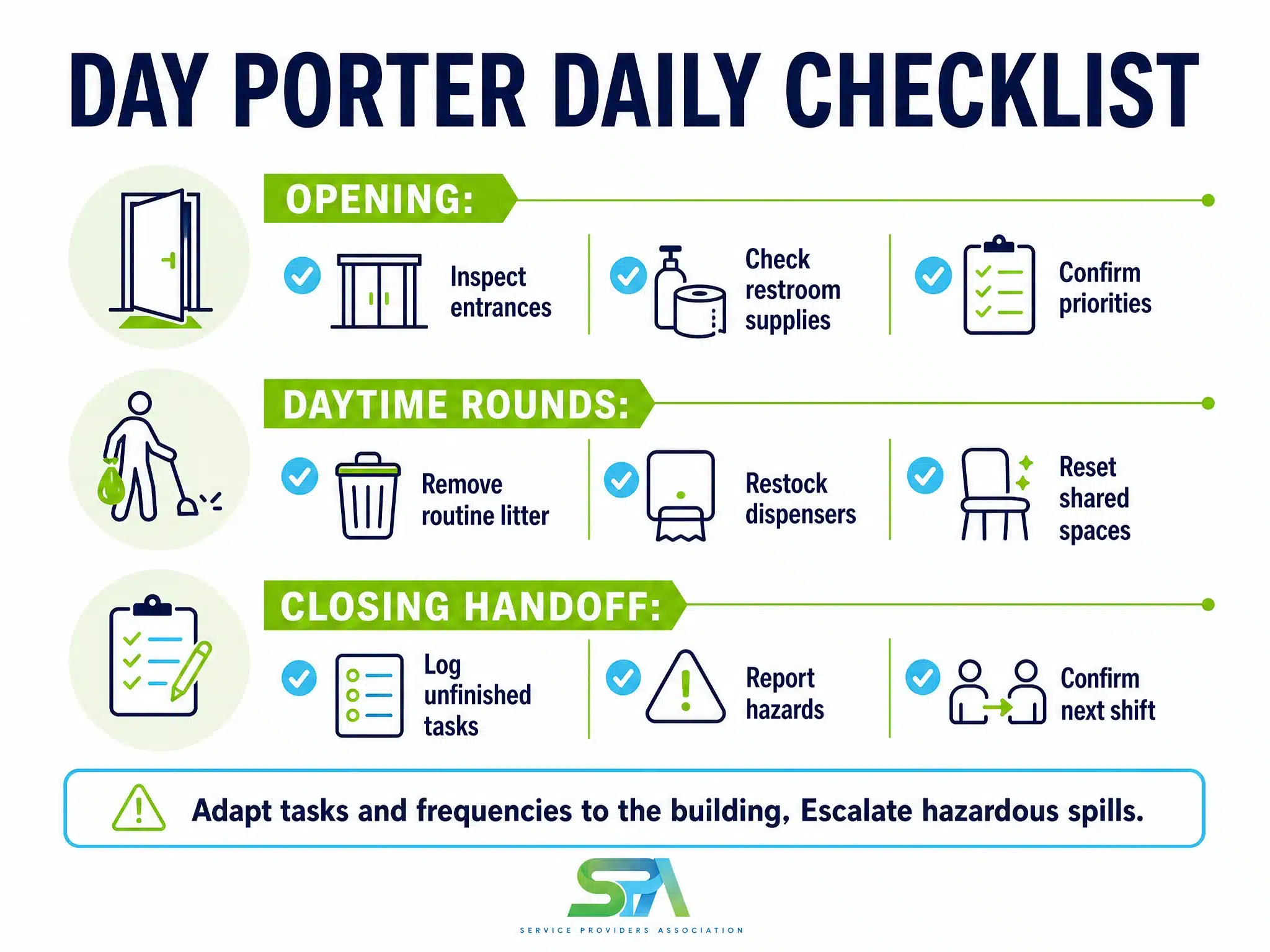
Opening checklist
| Check | What to record | Escalate when |
|---|---|---|
| Entrances and agreed walkways | Litter, mat position and visible floor condition | A leak, damaged surface or unidentified material is found |
| Restrooms | Supplies, routine soil and fixture concerns | A fixture leaks or a room needs to be taken out of use |
| Shared waste points | Available capacity and ordinary litter | Waste is unusual, sharp or outside the agreed handling scope |
| Common rooms | Readiness and booked events affecting access | Access is unavailable or priorities conflict |
| Supplies and equipment | Stock available for the shift | A shortage prevents the agreed work |
Opening work establishes priorities for the actual day. For example, a large morning meeting may require a kitchen reset earlier than the normal route. Note the change rather than silently dropping another task.
Daytime rounds: a repeatable work plan
Restrooms and consumables
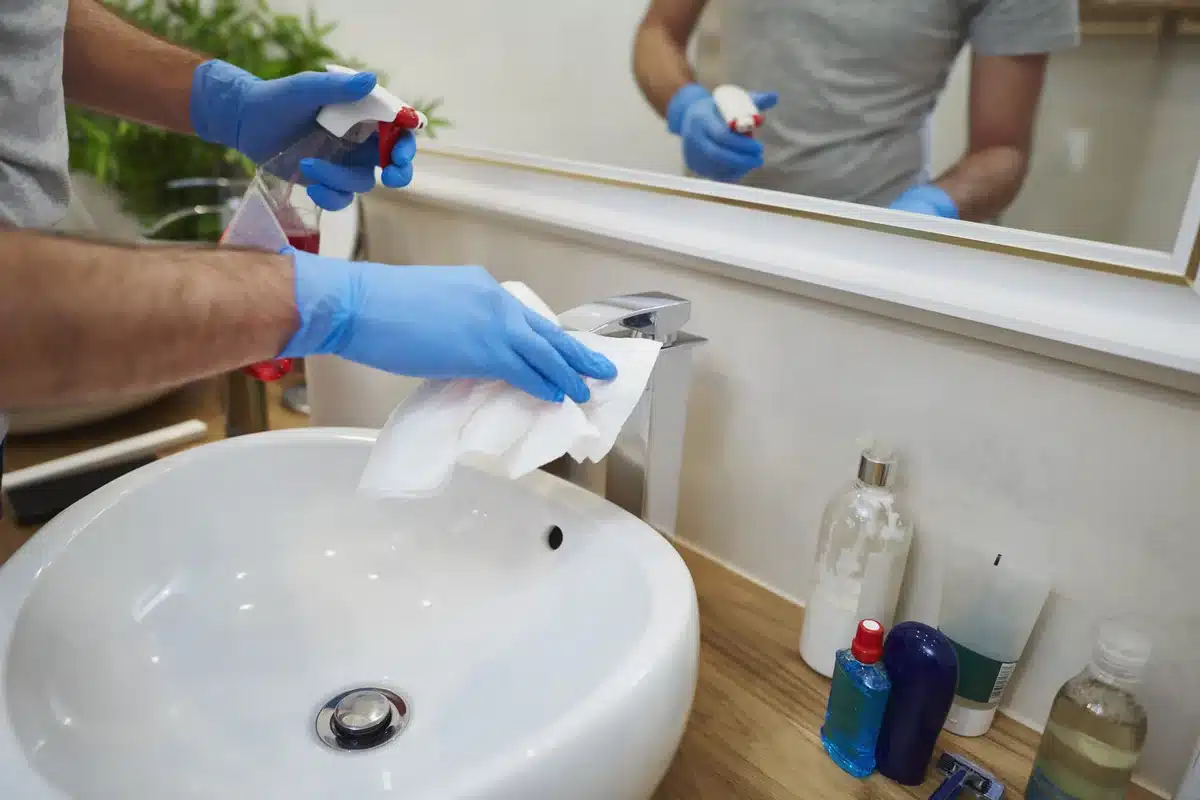
Inspect the agreed restrooms at intervals matched to use. Record replenishment and any cleaning completed. Separate a routine low-stock issue from a broken dispenser, blocked fixture or leak that needs another responsible person.
Lobbies, corridors and shared rooms
Remove ordinary litter and spot-clean permitted surfaces using the agreed method. Coordinate work so equipment and wet areas do not obstruct circulation. OSHA's surface requirements are a useful reference for the employer's inspection and hazard-control responsibilities; a checklist does not replace site procedures.
Peak-use resets
Add a planned check after the busiest period rather than assigning the same frequency everywhere. A lunch area, visitor entrance and lightly used conference room may need different attention. Confirm whether event setup, dishes or moving furniture are excluded.
Keep cleaning and disinfection instructions separate
“Wipe down” is not an adequate disinfection instruction. If disinfection is included, identify the approved product, surfaces and label procedure. CDC facility guidance distinguishes cleaning from disinfection and emphasizes product directions and safe use.
Do not add a universal chemical dilution or dwell time to the template. The assigned worker needs the relevant product instructions and the training required for the task.
Closing handoff template
- Completed: list scheduled rounds and approved additional requests.
- Outstanding: identify work not completed and why.
- Escalated: record the location, concern, time and person notified.
- Supplies: note items approaching the agreed reorder point.
- Next shift: flag access changes, events and unusual occupancy.
A short, specific note is better than a row of unexplained checkmarks. “Second-floor restroom: soap dispenser damaged; manager notified” gives the next person an action. Avoid resident details, confidential paperwork or unnecessary photographs in logs.
Review the checklist after normal operations
Use the first operating period to see whether the route fits the building. Compare repeat complaints, missed areas, supply shortages and work carried over. Adjust tasks and frequencies through the agreed approval process.
Coordinate this review with the regular commercial cleaning scope so daytime and after-hours staff do not assume the other team owns the same task.
Day porter checklist questions
Should every task be completed hourly?
No. Set frequencies according to usage, risk and the contract. A busy restroom may need more attention than a low-use meeting room. Identify how urgent requests affect the planned route.
Who signs off on the checklist?
Agree on a property contact and a provider supervisor. Specify whether they review exceptions daily, inspect selected areas or discuss trends at scheduled reviews. The process should be realistic for the staffing arrangement.
Can SPA adapt this checklist to my building?
Bring your room list, opening hours and recurring trouble spots to Service Providers Association. Call 515-619-6430 or send your requirements to work toward a checklist that fits your building.