A warehouse cleaning checklist should divide the facility into zones, assign tasks and frequencies, identify safe access windows and distinguish routine housekeeping from specialist work. Include shared rooms and pedestrian routes as well as operational areas. Every task should have an owner, a completion standard and a way to report exceptions.
Before asking for a price, mark the cleaning area on a floor plan. The full warehouse footprint is rarely an accurate description of what a contractor can safely access and clean during normal operations.
Divide the warehouse into practical cleaning zones
| Zone | Tasks to discuss | Access or scope questions |
|---|---|---|
| Pedestrian routes | Remove routine loose debris and clean agreed floor areas | How are vehicle movements separated from cleaning? |
| Entrances and reception | Maintain mats, glazing within reach and designated floors | Who handles weather-related hazards and damaged mats? |
| Restrooms and break rooms | Clean surfaces, remove ordinary waste and replenish supplies | Who buys consumables and sets inspection frequency? |
| Office areas | Vacuum, empty designated bins and clean permitted surfaces | Which desks, documents and rooms are restricted? |
| Loading and storage zones | Only the agreed tasks in released areas | Who authorizes access and manages goods or equipment? |
This is a planning template, not permission to work around moving vehicles or active equipment. Your site contact must identify safe access arrangements and procedures before the route is approved.
Separate daily, periodic and requested work
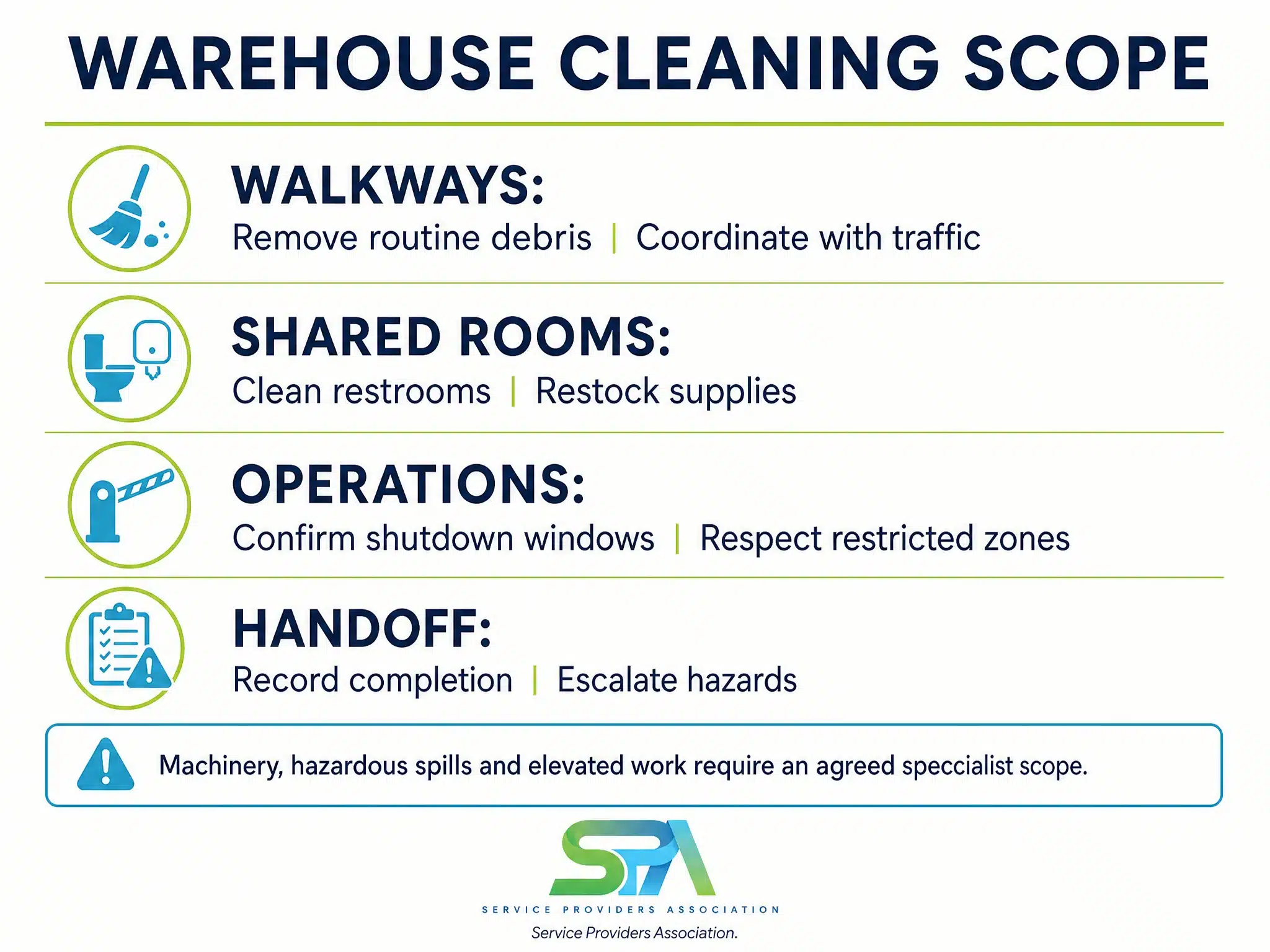
Daily tasks might include ordinary litter collection and cleaning shared facilities. Periodic work can include an agreed machine-cleaning task or detail cleaning in an accessible area. Spill response and unusual contamination need their own instructions because the material and circumstances determine who can act.
For each line, use the format: area → task → frequency or trigger → access window → completion record. Avoid “clean warehouse as needed,” which leaves the worker and facility manager to interpret the scope differently.
When comparing commercial cleaning services, send each provider the same zone list and explain what the warehouse team will continue to handle internally.
Keep routine housekeeping distinct from specialist tasks
Do not automatically include machinery interiors, electrical equipment, elevated racking, combustible dust, hazardous chemicals, pest waste or regulated materials in a general checklist. Define who evaluates those needs and whether a separate specialist scope is required.
The OSHA warehouse safety resource identifies hazards associated with warehouse operations. A cleaning plan must fit the site's controls; adding a contractor does not remove the employer's responsibilities.
Build access and traffic controls into the schedule
Ask the operations manager when aisles and work zones can be released. Plan equipment movement, cords, barriers and drying areas so cleaning does not create a new obstruction. If an area cannot be cleaned safely in the available window, record the exception and agree on another time.
OSHA 1910.22 addresses orderly surfaces, inspection and correction of hazards. Use the actual site procedure to decide who isolates a hazard and who authorizes reopening.
During a busy shift, daytime porter coverage may help maintain shared restrooms and break rooms while the scheduled cleaning route remains separate. Confirm availability and duties rather than assuming continuous coverage is included in a warehouse quote.
Define what a completed task looks like
Choose observable standards that match the task. Examples include designated bins emptied, agreed loose debris removed, dispensers replenished and an issue reported to the named contact. For floor work, identify the surface and agreed method; a visual improvement is not proof of disinfection or restoration.
Record why work was not completed. “Aisle unavailable during loading” should lead to a scheduling decision. Without that note, an access problem can look like a missed visit and repeat indefinitely.
Questions to answer before requesting proposals
- What is the cleanable area for each zone, not just total building size?
- Which shifts, deliveries or shutdowns control access?
- Who supplies approved equipment, products and consumables?
- What induction and protective equipment does the site require?
- Which tasks need separate approval or specialist assessment?
- Who receives the completion log and unresolved issues?
Warehouse cleaning checklist FAQs
Should warehouse floors be cleaned while forklifts are operating?
Only under the site's approved arrangements for separating cleaning work from vehicle traffic. If safe access cannot be established, schedule the task for a released zone or another window. Do not use a generic checklist to override traffic procedures.
Does a general cleaning contract include machinery cleaning?
Not unless it is explicitly included and the provider has confirmed the required capability and safe process. Identify equipment boundaries and authorization before work starts.
What information does SPA need for a warehouse cleaning quote?
Send the address, zone list, approximate cleanable areas, operating shifts and access restrictions to Service Providers Association. Call 515-619-6430 or contact SPA to discuss a practical scope.